%20%20--%3E%0A%3Csvg%20version%3D%221.1%22%20xmlns%3D%22http%3A%2F%2Fwww.w3.org%2F2000%2Fsvg%22%20xmlns%3Axlink%3D%22http%3A%2F%2Fwww.w3.org%2F1999%2Fxlink%22%20x%3D%220px%22%20y%3D%220px%22%0A%09%20viewBox%3D%220%200%201310.5%20200%22%20style%3D%22enable-background%3Anew%200%200%201310.5%20200%3B%22%20xml%3Aspace%3D%22preserve%22%3E%0A%3Cstyle%20type%3D%22text%2Fcss%22%3E%0A%09.st0%7Bfill%3A%23231F20%3B%7D%0A%09.st1%7Bfill%3A%2312284B%3B%7D%0A%09.st2%7Bfill%3A%23FFC52F%3B%7D%0A%09.st3%7Bfill%3A%23FFFFFF%3B%7D%0A%3C%2Fstyle%3E%0A%3Cg%20id%3D%22Template%22%3E%0A%3C%2Fg%3E%0A%3Cg%20id%3D%22Layer_2%22%3E%0A%09%3Cpolygon%20class%3D%22st2%22%20points%3D%22699.4%2C88.9%20710.8%2C88.9%20710.8%2C84.1%20713.5%2C84.1%20713.5%2C111.6%20708.5%2C111.6%20708.5%2C122.6%20731.2%2C122.6%20%0A%09%09731.2%2C111.6%20726.2%2C111.6%20726.2%2C84.1%20728.8%2C84.1%20728.8%2C88.9%20740.3%2C88.9%20740.3%2C73.3%20699.4%2C73.3%20%09%22%2F%3E%0A%09%3Cpolygon%20class%3D%22st2%22%20points%3D%22774.7%2C84.3%20779.7%2C84.3%20779.7%2C93.2%20761.5%2C93.2%20761.5%2C84.3%20766.6%2C84.3%20766.6%2C73.3%20743.8%2C73.3%20%0A%09%09743.8%2C84.3%20748.9%2C84.3%20748.9%2C111.6%20743.8%2C111.6%20743.8%2C122.6%20766.6%2C122.6%20766.6%2C111.6%20761.5%2C111.6%20761.5%2C103.8%20779.7%2C103.8%20%0A%09%09779.7%2C111.6%20774.7%2C111.6%20774.7%2C122.6%20797.4%2C122.6%20797.4%2C111.6%20792.4%2C111.6%20792.4%2C84.3%20797.4%2C84.3%20797.4%2C73.3%20774.7%2C73.3%20%09%22%2F%3E%0A%09%3Cpolygon%20class%3D%22st2%22%20points%3D%22832.8%2C111.6%20818.7%2C111.6%20818.7%2C103.3%20833.6%2C103.3%20833.6%2C92.6%20818.7%2C92.6%20818.7%2C84.4%20832%2C84.4%20%0A%09%09832%2C89.2%20843.4%2C89.2%20843.4%2C73.3%20801%2C73.3%20801%2C84.3%20806%2C84.3%20806%2C111.6%20801%2C111.6%20801%2C122.6%20844.2%2C122.6%20844.2%2C106.7%20832.8%2C106.7%20%09%0A%09%09%22%2F%3E%0A%09%3Cpath%20class%3D%22st2%22%20d%3D%22M932.2%2C95.6c0.6-0.3%2C1.6-1%2C3.5-2.4c5.7-4.1%2C8.5-10.4%2C8.5-18.7c0-6.9-2.5-13.1-7.4-18.5%0A%09%09c-2.8-2.9-6.9-5.3-12.2-7c-5.3-1.7-11.5-2.5-18.7-2.5h-52.5v22.1H864v58.6h-10.5v22.1H911c14.6%2C0%2C25.1-3.3%2C31.1-9.8%0A%09%09c5.2-5.6%2C7.9-12.2%2C7.9-19.5c0-6.6-2.1-12.3-6.1-16.8C940.8%2C99.8%2C936.9%2C97.3%2C932.2%2C95.6z%20M890.5%2C68.6h9.4c6.5%2C0%2C11.1%2C0.7%2C13.8%2C2%0A%09%09c2.3%2C1.1%2C3.4%2C3.5%2C3.4%2C7.3c0%2C3.7-1.2%2C6-3.6%2C7.1c-2.9%2C1.2-7.5%2C1.9-13.7%2C1.9h-9.3V68.6z%20M918.8%2C125c-3.1%2C1.5-7.8%2C2.2-14.2%2C2.2h-14.2%0A%09%09v-19.6h12c7.4%2C0%2C12.9%2C0.7%2C16.2%2C2.1c2.9%2C1.2%2C4.2%2C3.7%2C4.2%2C7.6C922.8%2C121.2%2C921.5%2C123.7%2C918.8%2C125z%22%2F%3E%0A%09%3Cpath%20class%3D%22st2%22%20d%3D%22M1032.3%2C112.8c12.4-5.2%2C18.7-15.9%2C18.7-31.6c0-12.1-3.7-21-11-26.5c-7.1-5.4-19.1-8.2-35.4-8.2h-51.4v23h10.5%0A%09%09v56.8h-10.5v23h47.5v-23h-10.5v-8.8h13.5l22.4%2C31l0.5%2C0.7h31v-23h-15.3L1032.3%2C112.8z%20M1020.4%2C91.8c-2.6%2C2.2-7.6%2C3.3-15.1%2C3.3%0A%09%09h-15.2V68.9h15.7c7%2C0%2C12%2C0.9%2C14.6%2C2.7c2.4%2C1.7%2C3.7%2C4.9%2C3.7%2C9.6C1024.2%2C86.1%2C1022.9%2C89.6%2C1020.4%2C91.8z%22%2F%3E%0A%09%3Cpolygon%20class%3D%22st2%22%20points%3D%221128.5%2C126.3%201099.2%2C126.3%201099.2%2C109%201130.2%2C109%201130.2%2C86.8%201099.2%2C86.8%201099.2%2C69.6%201126.9%2C69.6%20%0A%09%091126.9%2C79.7%201150.7%2C79.7%201150.7%2C46.5%201062.2%2C46.5%201062.2%2C69.5%201072.7%2C69.5%201072.7%2C126.3%201062.2%2C126.3%201062.2%2C149.3%201152.3%2C149.3%20%0A%09%091152.3%2C116.2%201128.5%2C116.2%20%09%22%2F%3E%0A%09%3Cpolygon%20class%3D%22st2%22%20points%3D%221268.7%2C46.5%201268.7%2C69.5%201274.4%2C69.5%201263.3%2C100.2%201246.2%2C46.5%201219.7%2C46.5%201202.4%2C100.2%201191.5%2C69.5%20%0A%09%091197.2%2C69.5%201197.2%2C46.5%201155.4%2C46.5%201155.4%2C69.5%201163%2C69.5%201191.6%2C148.2%201192%2C149.3%201211.6%2C149.3%201232.9%2C83.9%201254.3%2C149.3%20%0A%09%091273.9%2C149.3%201302.9%2C69.5%201310.5%2C69.5%201310.5%2C46.5%20%09%22%2F%3E%0A%09%3Cg%3E%0A%09%09%3Cpath%20class%3D%22st3%22%20d%3D%22M155.5%2C164.8c-3.3-7.4-3.5-18.6-4.8-30.4c-0.4-3.5-2.9-18-9.9-25.6c-6.8-7.6-15.5-10.6-16.8-11.4%0A%09%09%09c12.4-4.7%2C19.9-10.5%2C24.8-19.4c8.1-15.9%2C8.9-33.3-6.2-48.4c-3.7-3.7-9.3-6.6-16.7-9.1c-28.1-9.9-76.5%2C3.1-102-5.4%0A%09%09%09C15.7%2C12.4%2C14.2%2C6.4%2C13.2%2C2c-0.8-4.3-6.4-0.8-8.5%2C2.5C1.4%2C9.7-2.5%2C21%2C8.9%2C29.1c13.7%2C9.7%2C57.5%2C5.4%2C84.8%2C5.8%0A%09%09%09c29.4%2C0.4%2C34.1%2C22.8%2C22.8%2C43.2c-8.7%2C15.3-28.8%2C14.1-32.1%2C13.2C85.8%2C86.6%2C95.9%2C56%2C97%2C51.9c2.1-6.8-2.9-11.8-8.5-10.3%0A%09%09%09c-7.6%2C2.5-6.2%2C6-30.8%2C12.2c-8.3%2C2.1-4.4%2C7-2.1%2C11.4c0.8%2C1.4%2C0.6%2C4.1%2C0%2C6.8c-0.4%2C1.6-17.2%2C59.4-22.3%2C74.5c-1.5%2C4.5-4.1%2C5.6-7.2%2C7.9%0A%09%09%09c-7%2C4.8-8.3%2C11.8%2C1%2C11.8c14.7-0.2%2C28.3%2C0%2C42%2C0c3.7%2C0%2C6.2-1.7%2C6.4-5.4c0-6.4-7.6-6.4-7.7-10.1c2.9-11.6%2C8.3-33.1%2C11.8-44.3%0A%09%09%09c10.7-0.8%2C19%2C1.7%2C24.6%2C5.8c7%2C5%2C7.7%2C15.5%2C8.1%2C19.6c1.2%2C13.5%2C1.9%2C32.5%2C5.6%2C43c2.5%2C7%2C6.4%2C13.7%2C12.6%2C17c15.9%2C8.3%2C35.8%2C1.6%2C42.6-2.7%0A%09%09%09c5.2-2.9%2C6.8-6.8%2C4.8-10.3C175.7%2C174.7%2C163.1%2C181.5%2C155.5%2C164.8z%22%2F%3E%0A%09%09%3Cpath%20class%3D%22st3%22%20d%3D%22M311.3%2C57.6c6.1%2C0%2C11.7-4.6%2C12.4-10.5c0.9-6-3.5-10.6-9.4-10.6c-6.1%2C0-11.7%2C4.6-12.6%2C10.6%0A%09%09%09C301%2C52.9%2C305.2%2C57.6%2C311.3%2C57.6z%22%2F%3E%0A%09%09%3Cpath%20class%3D%22st3%22%20d%3D%22M510.9%2C57.6c6.1%2C0%2C11.7-4.6%2C12.4-10.5c0.9-6-3.5-10.6-9.4-10.6c-6.1%2C0-11.7%2C4.6-12.6%2C10.6%0A%09%09%09C500.6%2C52.9%2C504.8%2C57.6%2C510.9%2C57.6z%22%2F%3E%0A%09%09%3Cpath%20class%3D%22st3%22%20d%3D%22M690.6%2C91.1c-2.5-2.7-7.6-1.8-9.7%2C1.8c-3.6%2C6.4-8.1%2C21.6-16.5%2C22.2c-1.3%2C0.2-2.4-0.3-3.3-1.2%0A%09%09%09c-0.7-0.9-1.2-2.4-0.3-7.5c2-6.7%2C2.9-10%2C4-13.2c2.8-8.4%2C5.4-14.8%2C6.3-16.6c2.8-5.4%2C4.2-6.3%2C4.5-8.7c0.5-1.8-0.7-3-1.9-3.3%0A%09%09%09c-2.9-0.6-4.5%2C1.5-8.5%2C2.1c-5%2C0.9-13.3-1-13.8%2C2.1c-0.8%2C5.1-2.4%2C9.1-4.8%2C15.9c-6.4%2C19.3-8.8%2C24.6-9.3%2C26.4%0A%09%09%09c-8.1%2C19.8-17.5%2C12.6-16.3-0.3c0.5-4.5%2C1.2-10%2C3-15.6c4.8-14.4%2C9.6-19.6%2C15.4-19.8c2.2%2C3.9%2C8.4%2C2.5%2C8.8-2.2c0-3.6-2.8-7-12.1-6.3%0A%09%09%09c-16.3%2C1.2-32%2C14.3-37.2%2C31.6c-3.6%2C7.9-7.8%2C18.5-14.2%2C17.6c-3-0.3-2.8-4.5-2.1-8.1c0.5-2.7%2C4.3-14.5%2C4.5-21.3%0A%09%09%09c0.1-8.4-5.5-18.1-17.4-18.6c-4.8-0.1-9%2C2.1-12.7%2C5.1c1.2-1.8%2C1.8-2.7%2C2.1-4.3c0.1-1.6-1-3-2-3.1c-2.8-0.8-4.6%2C1.5-8.5%2C2.1%0A%09%09%09c-5.1%2C0.9-13.5-1-14.1%2C2.1c-0.8%2C4.9-2.1%2C9.1-4.6%2C15.9c-2%2C5.5-4%2C10.8-5.9%2C16.1c-3.1%2C6.5-7%2C13.6-12.6%2C14.1c-1.3%2C0-2.4-0.3-3.3-1.3%0A%09%09%09c-1-1.2-1.5-4.3%2C1-12.6c3.9-12.3%2C7.8-22.3%2C9-24.7c2.7-5.4%2C4.2-6.1%2C4.5-8.7c0.3-1.8-0.9-3-1.8-3.1c-3-0.8-4.6%2C1.3-8.7%2C2.1%0A%09%09%09c-5.1%2C0.9-13.5-1.2-13.9%2C2c-0.7%2C5.1-2.1%2C9.1-4.6%2C15.9c-1.2%2C3.4-3.6%2C9.7-5.3%2C14.3c-1.7%2C3.6-4.1%2C7.9-6.9%2C11.3%0A%09%09%09c-1.5%2C1.6-3.5%2C3.6-5.8%2C3.9c-3.6%2C0.4-3.9-3.1-5.7-7.1c1.2-2%2C2.4-4%2C3.6-6c2.2-3.7%2C4.3-7.5%2C5.4-10.2c6.1-14.4%2C5.8-21.6%2C0.3-25.2%0A%09%09%09c-1.6-1.2-3.9-1.5-6.6-1.5c-8.8%2C0.3-11.7%2C8.8-11.7%2C10.9c0%2C4.6%2C3.6%2C8.8%2C7.8%2C10.2c0.1%2C1.4-2.2%2C7.4-6.5%2C14.6%0A%09%09%09c-0.5-0.2-0.9-0.4-1.5-0.5c-5.4-0.6-10%2C3.7-11.4%2C8.8c-0.6%2C2.2-0.1%2C4.3%2C0.4%2C5.8c-0.6%2C0.2-1.3%2C0.6-1.9%2C0.6c-1.2%2C0.1-2.4-0.3-3.1-1.2%0A%09%09%09c-1.2-1.2-1.6-4.5%2C0.9-12.6c3.9-12.4%2C6.4-18%2C7.8-20.5c2.5-5.4%2C4-6.1%2C4.5-8.7c0.1-1.8-1-3-2-3.1c-3-0.8-4.6%2C1.3-8.5%2C2.1%0A%09%09%09c-5.1%2C0.9-13.5-1-14.1%2C2.1c-1.2%2C7.6-2.3%2C8.4-9%2C27.1c-3.3%2C6.9-7.2%2C14.2-13%2C14.7c-1.2%2C0.2-2.4-0.3-3.1-1.2c-2.1-2.3%2C0-9.6%2C0.9-12.6%0A%09%09%09c3.9-12.3%2C7.9-22.3%2C9.1-24.9c2.5-5.2%2C4-6.1%2C4.5-8.5c0.3-1.8-1-3-2-3.3c-2.8-0.6-4.6%2C1.5-8.5%2C2.2c-5.1%2C0.8-13.5-1.2-14.1%2C2%0A%09%09%09c-0.7%2C4.9-2.1%2C9-4.2%2C14.7c-1.4%2C3.9-2.8%2C7.7-4.2%2C11.5c-1.1%2C1.8-2.5%2C3.9-4.3%2C6c-4.2%2C5.1-14.1%2C14.8-27.7%2C14.2%0A%09%09%09c-3.9-0.2-6.6-2.4-8.2-5.2c8.2-3.1%2C26.4-10.6%2C33-21.3c7.2-11.2%2C1.5-22.9-15.1-22.2c-21%2C1-37.8%2C17.3-42.1%2C33.5%0A%09%09%09c-3.2%2C6.9-7.3%2C15.2-13.3%2C15.7c-1.3%2C0-2.4-0.3-3.3-1.3c-1-1.2-1.5-4.3%2C1-12.6c3.9-12.3%2C7.8-22.3%2C9-24.7c2.7-5.4%2C4.2-6.1%2C4.5-8.7%0A%09%09%09c0.3-1.8-0.9-3-1.8-3.1c-3-0.8-4.6%2C1.3-8.7%2C2.1c-5.1%2C0.9-13.5-1.2-13.9%2C2c-0.7%2C5.1-2.1%2C9.1-4.6%2C15.9c-0.7%2C1.9-1.7%2C4.7-2.8%2C7.6%0A%09%09%09c-1.2%2C2.7-4.8%2C11.9-10%2C18.2c-1.5%2C1.6-3.5%2C3.6-5.8%2C3.9c-3.3%2C0.4-3.9-2.6-5.4-6.2c5.5-7.3%2C7.8-13.4%2C8.4-14.9%0A%09%09%09c6.1-14.4%2C5.8-21.6%2C0.3-25.2c-1.6-1.2-3.9-1.5-6.6-1.5c-8.8%2C0.3-11.7%2C8.8-11.7%2C10.9c0%2C4.6%2C3.6%2C8.8%2C7.8%2C10.2%0A%09%09%09c-0.2%2C3.7-2.6%2C8.4-5.5%2C12.5c-0.7-0.3-1.3-0.6-2.1-0.7c-5.4-0.6-10%2C3.7-11.4%2C8.8c-0.4%2C1.5-0.3%2C3.1%2C0%2C4.4c-3.8%2C1.9-8%2C3-10.3%2C0.7%0A%09%09%09c-2-2.2%2C0.1-9.6%2C1-12.6c3.9-12.3%2C7.8-22.3%2C9-24.9c2.7-5.2%2C4.2-6.1%2C4.5-8.5c0.3-1.8-0.9-3-1.8-3.3c-3-0.6-4.6%2C1.5-8.7%2C2.3%0A%09%09%09c-5.1%2C0.8-13.5-1.2-13.9%2C1.9c-1.8%2C9.4-5.7%2C17.7-8.5%2C26.2c-1.1%2C1.7-2.5%2C3.8-4.2%2C5.8c-4.2%2C5.1-14.1%2C14.8-27.7%2C14.2%0A%09%09%09c-3.9-0.2-6.6-2.4-8.2-5.2c8.2-3.1%2C26.4-10.6%2C33-21.3c7.2-11.2%2C1.5-22.9-15.1-22.2c-22.5%2C1-40.3%2C19.6-43%2C36.9%0A%09%09%09c-2.7%2C17.4%2C4.3%2C30%2C22.6%2C30c9.6%2C0%2C18-2.5%2C25.5-6.9c4.3-2.5%2C8.1-5.6%2C11.8-8.8c0.1%2C4.5%2C1.2%2C7.7%2C2.2%2C9.1c3.5%2C4.8%2C9.6%2C7.3%2C17.1%2C6.3%0A%09%09%09c8.7-1.5%2C15.4-5.3%2C21.5-10.1c3.5%2C2.9%2C7%2C3.9%2C8.3%2C4.2c9.4%2C1.9%2C16.3-1.6%2C21.1-5.5c0.4%2C2.5%2C1.1%2C4.5%2C1.8%2C5.5%0A%09%09%09c6.5%2C8.8%2C22.4%2C10.5%2C38.4-7.6c2.8%2C8.4%2C9.9%2C13.7%2C21.7%2C13.7c9.6%2C0%2C18-2.5%2C25.5-6.9c4.3-2.5%2C8.1-5.6%2C11.8-8.8c0.1%2C4.4%2C1.2%2C7.6%2C2.3%2C9%0A%09%09%09c5.8%2C8.2%2C20.1%2C10.5%2C34.7-3.7c2.6%2C10.2%2C18.6%2C16.7%2C35.8%2C0.9c3.1%2C2.2%2C6.1%2C3.1%2C7.2%2C3.3c9%2C1.9%2C15.8-1.3%2C20.5-5c0.4%2C2.3%2C1%2C4.2%2C1.7%2C5.2%0A%09%09%09c5.2%2C7.1%2C16.4%2C9.7%2C28.9%2C1.2c0.1%2C2.6%2C2.2%2C5%2C5%2C5h12.6c2.1%2C0%2C4-1.5%2C4.8-3.6c4.8-13.3%2C8.4-25.2%2C13.5-37.3c1.6-3.9%2C4-8.1%2C5.8-10.6%0A%09%09%09c4.6-6.4%2C13.3-8.7%2C9.4%2C3.6c-6.3%2C19.9-12.3%2C34.2-6.7%2C41.9c6.6%2C9%2C23.1%2C10.5%2C39.5-8.9c1.1%2C2.8%2C2.5%2C5.4%2C4.6%2C7.5%0A%09%09%09c8.7%2C9.1%2C21.3%2C7.9%2C29.4%2C3c-0.6%2C2.2-1.2%2C4.8-1.6%2C7c-9.3%2C40.1-35.3%2C28.9-32.3%2C19.3c5.5%2C1.5%2C12-1%2C11.8-7.8c0-5.2-5.7-9.3-11.7-6.1%0A%09%09%09c-1.9%2C1-2.6%2C1.8-3.2%2C2.3c-53.9-0.8-339.5-1.6-343.4-1.9c-15-1-35.3-2.7-47.6-1.5c-3.9%2C0.3-19.8%2C3.1-20.2%2C15.4%0A%09%09%09c-0.5%2C6.6%2C4.2%2C12.7%2C11.4%2C13.6c11.7%2C1.8%2C18.6-9.3%2C28.3-11.8c10.1-2.5%2C309-4.8%2C364.6-3.4v0.4c-1%2C6.1%2C0.1%2C13%2C2.8%2C17.2%0A%09%09%09c3.6%2C5.8%2C9.4%2C9.1%2C17.8%2C10.3c20.1%2C2.7%2C31.5-13.2%2C35.3-21.6c4.5-9.7%2C7-19.3%2C7-19.3l2.1-8.5c7.9-0.5%2C17.8-5.5%2C27.6-18.7%0A%09%09%09c5.5-7.5%2C6.7-11.1%2C8.4-15.1C691%2C97.3%2C692.3%2C92.8%2C690.6%2C91.1z%20M188.7%2C78.4c5.1-3.7%2C11.7-3.9%2C11.8%2C1.2c0.3%2C10.2-14.7%2C18.4-22.6%2C22.2%0A%09%09%09C177.6%2C94.3%2C180.2%2C84.4%2C188.7%2C78.4z%20M357.9%2C78.4c5.1-3.7%2C11.7-3.9%2C11.8%2C1.2c0.3%2C10.2-14.7%2C18.4-22.6%2C22.2%0A%09%09%09C346.8%2C94.3%2C349.4%2C84.4%2C357.9%2C78.4z%22%2F%3E%0A%09%3C%2Fg%3E%0A%3C%2Fg%3E%0A%3C%2Fsvg%3E%0A)

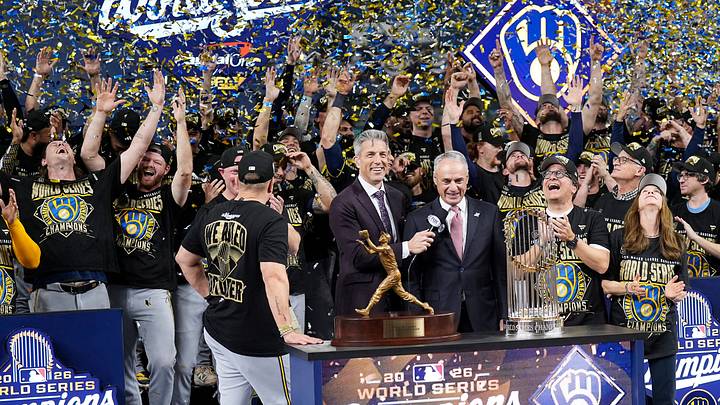
The Milwaukee Brewers stand alone after the marathon that is the Major League Baseball season, hoisting the Commissioner's Trophy for the first time in franchise history. Between the regular season and the postseason, the Brewers played 175 meaningful games in 2026, which doesn't include Spring Training and the World Baseball Classic, in which many key contributors like Brice Turang, Jackson Chourio, William Contreras, and Abner Uribe participated.
With their long-awaited World Series title, the Brewers will remain the center of attention in the baseball world for perhaps the next several months as Major League Baseball prepares for what could be a lengthy work stoppage this offseason. That said, this isn't a piece about the impending CBA negotiations or the intriguing offseason ahead for Matt Arnold and the Brewers' front office. No, today is a time to reflect and celebrate on a season that many of us felt we may never see.
A championship season isn't defined by any one game -- that is the beauty of baseball. In what is a long and grueling campaign, it's a vast collection of moments that lead to the ultimate conclusion. Games in April can set a team's tone and mentality for the whole season. How teams respond to the inevitable adversity they will face during the course of a season matters. Midseason additions and how the roster changes throughout the year undoubtedly have an impact. And how a team executes in the final games of the postseason certainly means a ton. With that in mind, here are five defining moments of the Milwaukee Brewers' 2026 World Series-winning season.
5 key moments that defined the Brewers' 2026 World Series-winning campaign
1. The Comeback Crew starts on the first weekend of the season
You don't win a championship in March, and you typically don't lose one then either. You can, however, establish an identity. One of the signature features of the Pat Murphy-led Brewers has been their relentless tenacity and a "never say die" attitude. This isn't new to anybody who has paid attention over the past few years.
In the opening series of the season, Milwaukee hosted the Chicago White Sox and took the first two contests. Brandon Sproat got the ball in the series finale, looking for the sweep, and, quite simply, got shelled. In just three innings of work, the young righty gave up six hits and four walks, including three home runs, allowing seven earned runs.
Milwaukee scored two runs in the bottom of the first, but trailed 7-2 when Sproat exited the game. The Brewers chipped away at the deficit with a run in the sixth, but certainly could have folded in the early-season blowout. Instead, they exploded for a six-run eighth inning, which was capped off by Christian Yelich popping a three-run home run to put Milwaukee in front for good.
We saw this relentlessness all season long, including the postseason, when the Brewers had comeback wins in each of their three playoff series. You can take your pick on which comeback was greater, the 4-0 comeback in the deciding game of the NLCS or the 4-0 comeback in Game 2 of the World Series. Whichever you land on, just remember this "Comeback Crew" mentality was present from the very first series of the season.
2. Showing resilience in the face of early-season injuries
Milwaukee won 103 regular season games and 114 contests overall. While that is historic dominance for any team, it is even more incredible when the rocky nature of the first month of the season is taken into account.
Through the first calendar month of the season, the Brewers were just 16-14, while playing many of those games with Jackson Chourio, Christian Yelich, and Andrew Vaughn, all on the injured list. After starting the season 8-2, Milwaukee would drop six games in a row, including a home sweep at the hands of the Washington Nationals. Later in April, they lost two out of three to both the Detroit Tigers and Pittsburgh Pirates to fall to 13-13 on April 25th.
Help was on the way, the team got healthy, and the Brewers slowly crept up the NL Central standings. From that point in late April, Milwaukee lost just 46 games the rest of the way. Record-wise, their second-worst month was August, when the squad went 17-12 and survived a stretch that featured 17 games in 17 days.
Getting through April, as injured as they were and staying above water, is a true testament to the resilience of the 2026 Brewers squad. Despite crushing injuries to key pieces of their offense, the Brewers kept their heads above water, and when the lineup finally reached full strength, everything, unsurprisingly, clicked.
3. Big moments from new faces
On many World Series-winning teams, there is often a signature trade deadline pickup that stands out. While Milwaukee wasn't silent at the deadline this year, they didn't go for the splashiest move. Tarik Skubal ended up with the Los Angeles Dodgers, and Milwaukee pivoted to Dustin May, JoJo Romero, and Antonio Senzatela.
May had some success early on, but late-season inconsistency led to a modified postseason role in which he turned in a lackluster performance. Antonio Senzatela was the opposite; he started off slow in a Brewers uniform, but turned in four scoreless appearances in the postseason. However, among the trio, it was Romero who ended up being the most important addition. In eight innings of postseason work, Romero allowed just three hits and one run while striking out 11. He was consistently called upon in high-leverage situations and rose to the occasion.
Beyond the trade deadline acquisitions, the Brewers called up a number of rookies throughout the course of the 2026 season. Logan Henderson and Robert Gasser each previously made their debuts, but maintained their rookie status in 2026 and both played integral roles in the Brewers' success. Meanwhile, Cooper Pratt and Luis Lara, both of whom also agreed to long-term extensions during the 2026 season, made their MLB debuts this year and undoubtedly impressed.
Henderson was the Brewers' true No. 2 pitcher during the second half of the season, steadying the rotation after Kyle Harrison went down with an injury and subsequently lost his effectiveness. Lara displayed Gold Glove-caliber defense in the outfield with several memorable plays in big moments. However, in the postseason, it was Pratt and Gasser that stole the show. Gasser started the Brewers' NLDS-clinching win in San Diego, before earning the ball in Game 3 of both the NLCS and World Series. "Bobby Diesel," as he's affectionately known by the Milwaukee faithful, ultimately covered 15.0 innings in the postseason, scattering seven hits in the process, while allowing just one run.
Then there was Pratt. The rookie shortstop certainly had a forgettable start to the postseason on the defensive end, yet he managed to shine when it mattered most. Pratt hit for a .354 average in the postseason, second to only World Series MVP William Contreras, knocked in seven runs on 17 hits, crushed what almost was the game-winning home run in the ill-fated Game 4 of the World Series, and drove in two of the Brewers' four runs in the clinching win. For a player who made his MLB debut just four months prior, it was surely a sight to behold.
4. Christian Yelich is (officially) named the Brewers' Captain
In many ways, it was a regular season to forget for Christian Yelich. He posted a full-season career-low .235 batting average, with just a .693 OPS. The Brewers had a designated hitter that was struggling to hit the baseball. He wasn't even getting on base, posting a career-low .315 on-base percentage. Yet, despite fans wanting him taken out of the lineup, Murphy kept him in the starting nine most days, though Yelich did drop a few spots in the batting order at one point.
However, despite the lackluster on-field performance from Yelich, on the penultimate day of the regular season, Pat Murphy named the former MVP the first official captain in franchise history, acknowledging the impact Yeli has off the field. Before he accepted the role, Yelich required the blessing of arguably the greatest Milwaukee Brewers player of all time, the guy he called the first captain, Robin Yount.
Yount, of course, gave his blessing, and the rest is history. Over the 12 postseason games, the newly-minted Captain rose to the occasion. Yelich recorded 11 hits, posted a strong .388 on-base percentage, racked up five RBI, and stole four bags. Whether or not his official assignment as the Brewers' "Captain" impacted that performance is impossible to determine, but there's no denying Yelich turned a page when the Brewers added a "C" to his jersey.
5. The storybook ending
When a team is able to finally get over the hump, it usually involves a number of demons being exercised and vanquished. The team came into the postseason winning a franchise record 103 games in the regular season, smashing the previous high of 97 set by last year's squad. For a second straight season, the Brewers posted the best record in all of baseball.
This matters, because coming into this postseason, the team had not won a road playoff game since 2018. In theory, the Brewers could still win the World Series without winning a road game, but it would give them no room for error down the stretch.
Of course, we know how this story ends. The Brewers took down the Padres in Game 4, in San Diego, after memorable wins at American Family Field in Games 1 and 2 of the series. Then, Milwaukee not only took down the mighty Dodgers but swept them and returned to the World Series for the first time since 1982.
Then, in true storybook fashion, in Game 3's blowout win in the World Series, the longest-tenured Milwaukee Brewers player, Brandon Woodruff, made an appearance. Woodruff had been thought to be lost for the season after re-injuring his troubled shoulder, the one that kept him out of the 2023 postseason and all of 2024. In fact, it was a gamble to even include him on the World Series roster since his injury history could potentially keep Milwaukee from replacing him if he re-injured that shoulder. But the gamble paid off.
From Ty France's ceiling-scraping flyout to Chourio's NLDS walk-off to the Brewers' historic sweep of the back-to-back reigning World Champions to Woodruff's return to Jake Bauers and Wild Bill each taking home series MVP awards to Robin Yount watching the Brewers hoist the Commissioner's Trophy for the first time, it truly was a storybook ending for Milwaukee -- one fans won't ever forget.
 Add us as a preferred source on Google